 FitCi
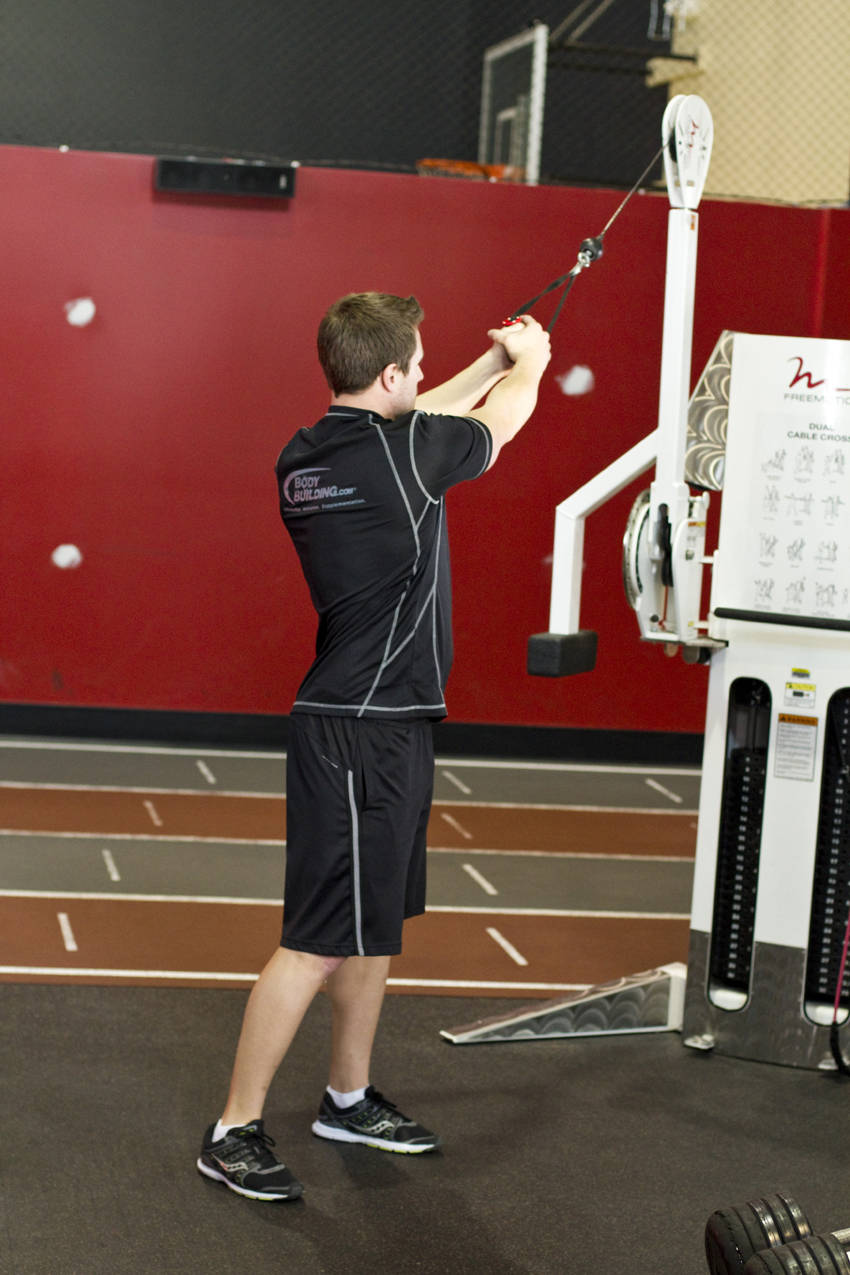
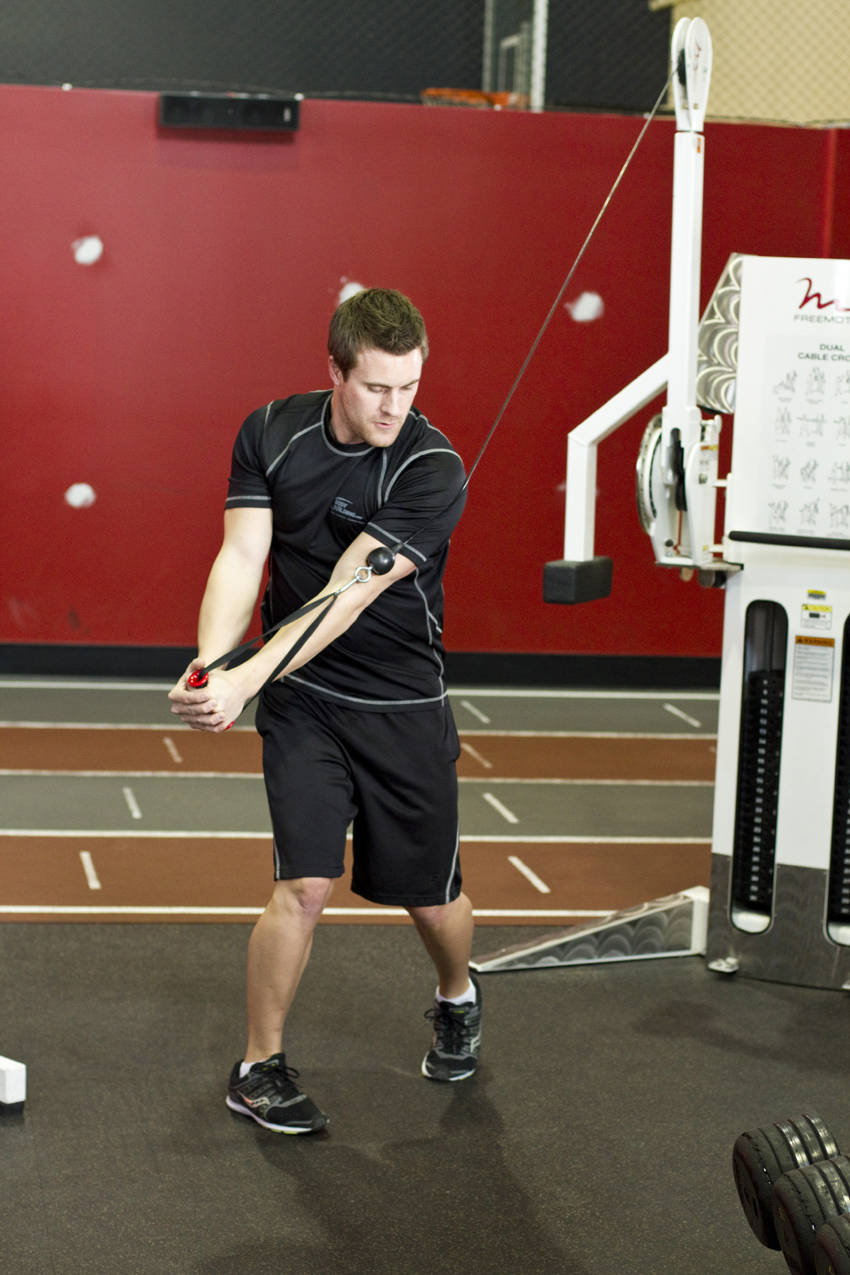
Cable Woodchopper is an isolation exercise for the core: one joint works, so it comes after the compound lifts to finish the target muscle. Equipment: cable, resistance band. Difficulty: intermediate, add it once the basics are solid. It takes 5 steps; the most common mistake is covered in the tip below.
Step-by-step
- Set the pulley to the high position, grip the handle with both hands, and stand side-on to the machine.
- Set your feet shoulder-width apart, knees slightly bent, and arms extended.
- Rotate your torso to pull the handle diagonally down toward your opposite hip.
- Generate the movement from your abs and torso rotation, not your arms.
- Return to the starting position under control and switch sides at the end of the set.
Coaching tip
Caution
How to program it
Sets × reps and rest by goal; tempo and controlled reps matter most on isolation work. Start at the bottom of the range in week one; add 2.5–5% when you hit the top with clean form.
| Goal | Sets × Reps | Rest |
|---|---|---|
| Strength | 3 × 6-8 | 120 s |
| Muscle gain | 3 × 10-15 | 75 s |
| Fat loss / conditioning | 3 × 12-15 | 60 s |
FitCi applies this table to your age and goal automatically and writes weekly progression.
Alternatives
- At home, no equipment: Plank, Hanging Leg Raise
- Same muscle, different equipment: Plank, Hanging Leg Raise, Hanging Knee Raise
Common mistakes
- Pulling with the arms. The most frequent error: the torso stays still and the shoulders do the work. Your arms only carry the handle; rotation comes from the hips and trunk. Keep the elbows slightly bent and fixed, think of your arms as one rigid lever.
- Bending at the waist. Rounding the back to reach the opposite knee shifts the load from the obliques to the lower back. Rotate through the chest and hips with a neutral spine.
- Locking the feet and hips. Let the back heel lift and the hips turn with you; a locked pelvis forces the lumbar spine to twist instead.
- Going too heavy. This is not a strength lift. As load rises the movement leaks into the arms and momentum; the right weight is one you can control for 12–15 clean reps.
- Rushing. One second to chop, two seconds to return. Resisting the stack on the way back is where the obliques work hardest.
Variations and progression
High-to-low (classic): pulley at the top, handle travels to the opposite hip. Upper obliques and front delts lead.
Low-to-high (reverse chop): pulley at the bottom, handle finishes above the opposite shoulder. More lower-oblique and shoulder involvement; pairing both directions in one session makes a balanced core block.
Horizontal (hip height): pulley at chest level, straight pull. Pure rotation, the closest relative of the Pallof press.
Half-kneeling: inside knee on the floor. It removes hip cheating and leaves the work to the trunk; the best way to learn the pattern.
At home: anchor a resistance band to a door or post; the same angles apply. Band tension peaks at the end of the movement, so a one-second hold at the finish is worth it.
Progression: half-kneeling light → standing → add load → slow eccentric (3-second return) → both directions back to back in one set.
FAQ
Does it burn belly fat?
No. No exercise selectively burns the fat over the muscle it trains; visible abs depend on body-fat percentage, which depends on overall energy balance. The woodchopper strengthens and thickens the obliques; they show once body fat comes down.
Is it safe with lower-back pain?
Loaded rotation aggravates some back conditions, which is why lower back and shoulder are on the caution list. With existing pain or a disc history, ask a professional first; if cleared, start half-kneeling with light load and stop if pain increases.
How often and where in the session?
It is an isolation core move, so it goes at the end of a workout: 2 days a week, 2–3 sets of 10–15 reps per side is plenty. Avoid fatiguing core work before heavy squats or deadlifts; your bracing suffers.
More core exercises
Add this exercise to your program
Build your own program in FitCi, pick an expert template, or photograph the plan your coach gave you; the app tracks sets, reps and weight.